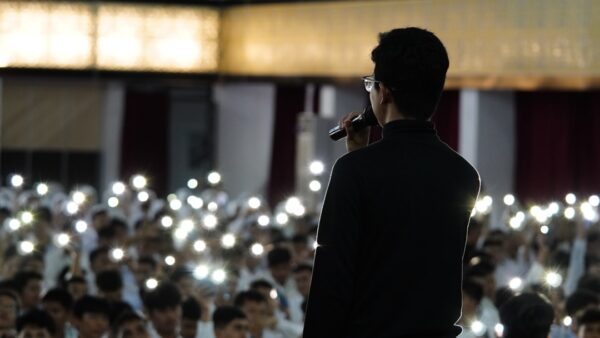
We, as beings who communicate, understand that public speaking is a skill as vital as it is daunting. The chasm between an idea in our minds and its articulate expression before an audience can feel immense, a turbulent ocean we must cross. For many, that crossing is fraught with anxiety, a fear that can silence even the most profound thoughts. This is precisely why we advocate for the cultivation of safe practice environments – spaces where nascent speakers can find their voice without the immediate pressure of perfection. We believe that such environments are not merely beneficial, but foundational, acting as the bedrock upon which confident articulation is built.
We recognize that confidence, particularly in public speaking, is not an innate trait but a cultivated state. It is a psychological construct deeply interwoven with our experiences and perceptions of safety. For more information, please visit BACK TO THE TOASTMASTERS WEBSITE.
The Role of Perceived Threat
Our limbic system, a primitive part of our brain, is wired for survival. When we perceive a threat, whether real or imagined, it triggers a "fight, flight, or freeze" response. For a speaker, a judgmental audience or a high-stakes setting can be perceived as a significant threat. We experience physiological symptoms such as a racing heart, shallow breath, and trembling, all designed to prepare us for an imminent danger. In such circumstances, our cognitive functions, including our ability to recall information, organize thoughts, and articulate clearly, become severely impaired. A safe practice environment mitigates this perceived threat, allowing our prefrontal cortex – the seat of executive functions – to operate optimally.
The Impact of Self-Efficacy
Self-efficacy, as defined by Albert Bandura, refers to our belief in our capacity to execute behaviors necessary to produce specific performance attainments. When we succeed in a task, our self-efficacy for that task increases. Conversely, repeated failures or negative experiences can diminish it. In the context of public speaking, small, incremental successes within a safe environment build our self-efficacy. Each successful delivery, even to a sympathetic peer group, reinforces the belief that we are capable. These early victories serve as building blocks, strengthening our resolve for more challenging speaking engagements.
Desensitization and Habituation
Exposure therapy, a well-established psychological intervention, demonstrates that gradual exposure to a feared stimulus can reduce anxiety over time. Similarly, repeated practice in a low-stakes environment allows us to desensitize ourselves to the act of speaking before others. Each time we speak, the novelty wears off, and the physical manifestations of anxiety diminish. This process, known as habituation, moves public speaking from an anomalous, anxiety-inducing event to a more routine and manageable activity.
The Architecture of a Safe Practice Environment
We understand that "safe" is not merely the absence of danger, but the active presence of supportive elements. Crafting such an environment requires intentional design and consistent reinforcement.
Constructive Feedback Mechanisms
Feedback is the lifeblood of improvement, but its delivery is paramount. In a safe environment, feedback is not a weapon but a tool – a precision instrument designed to sculpt and refine. It focuses on specific behaviors rather than character, offering actionable suggestions rather than vague criticisms. We prioritize descriptive over evaluative feedback, detailing what we observed and how it impacted us, rather than simply stating something was "bad" or "good."
Specificity and Actionability
Vague feedback like "you need to be more confident" is unhelpful. Instead, we encourage feedback such as, "When you maintained eye contact with various audience members, your message felt more engaging. Perhaps try incorporating more of that." This provides a clear area for improvement and a tangible action to take.
The Sandwich Method
While sometimes cliché, the "sandwich method" – positive observation, constructive criticism, positive observation – can be effective in buffering the impact of critical feedback, ensuring the speaker remains receptive and not demoralized.
Focus on Growth, Not Perfection
We emphasize that practice is about iteration and refinement. The goal is not to deliver a flawless speech on the first attempt, but to identify areas for improvement and steadily progress towards clearer, more impactful communication.
Empathy and Non-Judgmental Attitudes
A truly safe environment necessitates an atmosphere of empathy. We understand that everyone has experienced the tremor of nerves, the fleeting thought of failure. When we observe another speaker, we approach them with understanding and compassion, recognizing their vulnerability. Judgment, even unspoken, is a potent inhibitor of risk-taking, and risk-taking is essential for growth. We cultivate an environment where mistakes are viewed as learning opportunities, not as definitive failures.
Active Listening
Demonstrating active listening – maintaining eye contact, nodding, and offering verbal affirmations – signals to the speaker that their message is being received and valued, fostering a sense of psychological safety.
Shared Vulnerability
Often, instructors or more experienced peers can share their own past struggles or "rookie mistakes." This humanizes the experience and normalizes the challenges associated with public speaking, making the environment feel less intimidating.
Low-Stakes Opportunities
The pressure to perform flawlessly dramatically escalates when the stakes are high. A safe practice environment intentionally lowers these stakes. This can manifest in various forms:
Small Group Settings
Practicing with a handful of trusted peers, rather than a large, unfamiliar audience, significantly reduces performance anxiety. The intimacy of a small group fosters a more relaxed and conversational atmosphere.
Informal Presentations
Instead of formal speeches with strict time limits and elaborate visual aids, we encourage informal discussions, impromptu talks, or short presentations on familiar topics. This allows speakers to focus on the core act of articulation without the burden of complex preparation.
No-Consequence Zones
In these zones, we explicitly state that errors will not result in negative evaluations, social ostracization, or professional repercussions. The primary purpose is exploration and learning, not flawless execution.
The Confidence Dividend
We observe that the benefits of a safe practice environment extend far beyond mere technical proficiency. They contribute to a holistic development of the speaker.
Increased Willingness to Take Risks
When a speaker operates within a psychological safety net, they are more inclined to experiment with different delivery styles, rhetorical devices, and storytelling techniques. They are no longer paralyzed by the fear of failure, viewing each attempt as an opportunity to discover what resonates with an audience and what needs refinement. This willingness to innovate is crucial for developing a unique and authentic speaking voice. We see speakers try out humor, vulnerability, or even a more confrontational style, knowing that if it doesn't land perfectly, the worst outcome is constructive feedback, not humiliation.
Enhanced Authenticity and Presence
When the pressure to conform or impress is removed, speakers are more likely to tap into their genuine selves. They cease to perform a stiff, artificial version of what they imagine a "good speaker" should be and instead allow their unique personality, experiences, and passions to shine through. This authenticity is a powerful magnet for an audience, fostering connection and trust. A speaker who is truly present, grounded in their own voice rather than an imagined ideal, exudes a compelling charisma. We've witnessed individuals transform from robotic recitations to vibrant storytellers simply by feeling safe enough to be themselves.
Improved Resilience and Adaptability
Even the most seasoned speakers encounter unexpected challenges – technical glitches, unresponsive audiences, or unanticipated questions. A speaker who has developed confidence in a safe environment is better equipped to handle these curveballs. They have learned that setbacks are not catastrophic and that they possess the internal resources to adapt and recover. This resilience is forged not in perfect performances, but in navigating and overcoming small challenges during practice. We see speakers, having practiced in diverse scenarios, gracefully recover from a forgotten line or a faulty slide, maintaining their composure and continuing their message.
Our Collective Responsibility
We recognize that creating these safe spaces is not solely the responsibility of an individual. It is a collective endeavor, a communal understanding that fosters growth. Whether in educational institutions, professional development programs, or community groups, we all have a role to play in championing environments where voices can flourish.
Establishing Norms and Expectations
From the outset, we establish clear norms that emphasize respect, support, and a growth mindset. These norms are not mere suggestions but the guiding principles of our interactions. We explicitly state that the space is for learning, and that all contributions, regardless of their perceived polish, are valued. This explicit declaration helps to set the tone and manage expectations, preventing misunderstandings or a competitive atmosphere from developing.
Providing Resources and Support
Beyond the psychological aspects, we ensure that practical resources are available. This can include access to recording equipment for self-assessment, guides on structuring presentations, or even simply a quiet space for practice. The availability of these tangible resources reinforces the commitment to speaker development and removes practical barriers to engagement. We recognize that sometimes the fear isn't just about the speaking, but about the technicalities, and providing support here can be just as crucial.
Leading by Example
Those of us in leadership or mentorship positions bear a particular responsibility to model the very behaviors we wish to cultivate. We actively listen, provide constructive feedback, share our own vulnerabilities, and approach each speaker with empathy. Our actions speak louder than our words in establishing the true safety of the environment. If we, as hosts or mentors, exhibit judgment or impatience, the perceived safety of the space quickly erodes, regardless of stated intentions.
In conclusion, we firmly believe that fostering safe practice environments is not a luxury but a necessity for cultivating confident speakers. It is in these carefully constructed spaces, free from the immediate fear of judgment and failure, that individuals can truly discover and hone their voice. Like a fledgling bird learning to fly in a sheltered nest before venturing into the vast sky, speakers need a protected space to spread their wings. By prioritizing empathy, constructive feedback, and low-stakes opportunities, we are collectively building the foundations for a world where every voice, regardless of its nascent stage, can find the courage and conviction to be heard.
FAQs
What is a safe practice environment?
A safe practice environment is a supportive and non-judgmental space where individuals can practice speaking skills without fear of criticism or failure. It encourages learning through positive feedback and constructive guidance.
How do safe practice environments help build confidence in speakers?
Safe practice environments reduce anxiety and fear of making mistakes, allowing speakers to focus on improving their skills. This supportive setting helps individuals gain experience, receive encouragement, and gradually build self-assurance.
What are some key features of a safe practice environment for speakers?
Key features include respectful and encouraging participants, constructive feedback, opportunities for repeated practice, and an atmosphere that values effort and progress over perfection.
Can safe practice environments benefit both beginners and experienced speakers?
Yes, safe practice environments benefit speakers at all levels by providing a space to refine skills, experiment with new techniques, and maintain confidence through ongoing support and practice.
How can one create a safe practice environment for public speaking?
To create a safe practice environment, establish clear guidelines for respectful communication, encourage positive and constructive feedback, foster inclusivity, and provide regular opportunities for practice in a low-pressure setting.